The Record Behind the Work
The Investigation
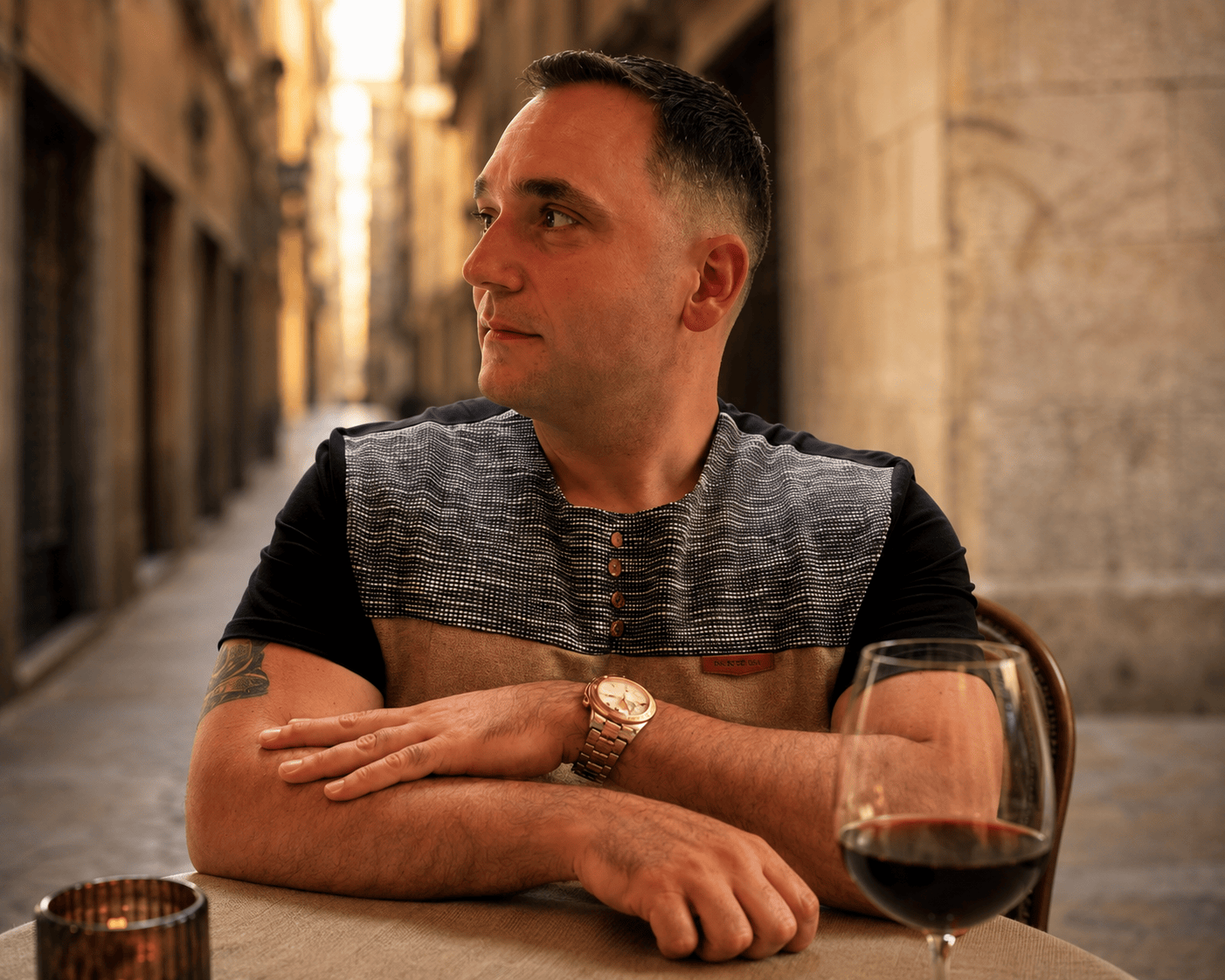
For as long as I can remember, I lived with the quiet sense that something important was missing.
I couldn’t have explained it then, and I certainly couldn’t have named it. It wasn’t a theory or a belief. It was simply a question that refused to disappear.
As life unfolded, that question traveled with me.
Through public service.
Through personal loss.
Through leadership.
Through thousands of investigations.
Through years spent studying technology, education, psychology, philosophy, artificial intelligence, and human behavior.
The environments changed.
The question remained.
Contrary to what many people assume, I did not grow up wanting to become a law enforcement officer.
My original ambition was to work in the music industry as a recording engineer. I was fascinated by the way individual sounds could be isolated, examined, and brought together to create something larger than any one part. Looking back, I didn’t realize how much that way of thinking would eventually shape the rest of my life.
Everything changed after an encounter with a police officer whose professionalism, command presence, and quiet authority left a lasting impression on me. It wasn’t a dramatic moment, but it redirected my attention toward criminology and public service. As I learned more about the profession, curiosity gradually became conviction. I developed an overwhelming sense that this was the work I was meant to do, and I became determined to overcome whatever obstacles stood between me and that goal.
Over more than two decades in public safety and digital forensic investigations, I worked in environments where every decision began with the same responsibility:
Determine what happened before deciding why.
That discipline eventually became much more than a professional responsibility.
It became a way of seeing.
Along the way, I pursued graduate study in Instructional Technology, undergraduate study in Applied Science and Technology (Information Technology), and extensive professional training in digital forensics, mobile device examinations, leadership, and criminal investigations. Each discipline offered a different way of understanding the world. Each expanded the investigation.
None appeared capable of carrying the whole thing.
There wasn’t one case that changed everything.
There were hundreds.
Early in my career, I believed each investigation was primarily about understanding a particular person or event. But after years of working in corrections, parole, and digital forensic investigations, I began noticing something that extended beyond any individual case.
Many of the people I supervised struggled to reconcile the harm they had caused with the way they understood themselves. Their explanations differed. Their circumstances differed. Yet the underlying patterns often felt remarkably familiar.
Over time, I became less interested in the specific facts that made each case unique and more interested in the recurring ways people interpreted, justified, and adapted to their own behavior.
That perspective deepened while observing court-mandated sex offender treatment sessions, where I provided security during group counseling. Week after week, I listened as participants confronted their actions, attempted to explain them, and struggled to integrate responsibility into their understanding of themselves.
The details of each case were different.
The broader questions continued to accumulate.
It gradually became clear that I was no longer investigating individual cases alone.
I was beginning to investigate the conditions under which human beings explain, justify, adapt to, and ultimately continue patterns of behavior.
Those observations refused to remain confined to criminal justice.
As the years passed, I found myself encountering remarkably similar questions in psychology, neuroscience, artificial intelligence, leadership, organizational behavior, systems theory, and philosophy.
The language differed.
The observations increasingly did not.
Throughout those years, I came to trust one thing above all else.
Memory changes.
Explanations evolve.
Institutions adapt.
Technology advances.
The record remains.
Again and again, I discovered that beginning with what remained led to better questions than beginning with what I believed.
Eventually, the investigation demanded a different kind of record.
It could no longer exist only in case files, reports, or conversations.
It became a book.
That book became The Execution Layer.
It is not a memoir.
It is not a traditional work of psychology.
It is not a leadership book.
It is not a book about artificial intelligence.
It is an interdisciplinary investigation that begins with a question that quietly accompanied me for much of my life:
“What if recognizing the pattern isn’t the same as escaping it?”
Beginning with the record rather than the explanation, The Execution Layer follows recurring observations across psychology, neuroscience, artificial intelligence, leadership, philosophy, and digital forensics to examine why recognition alone so often fails to change what happens next.
For much of my life, I believed I was searching for an answer.
Eventually, I realized I had inherited the wrong question.
That realization changed everything.
I no longer believe the responsibility of one person is to complete the investigation.
The investigation is larger than any one observer.
Larger than any one discipline.
Larger than any one lifetime.
At some point, I had to come to terms with the possibility that I would never see its conclusion.
Surprisingly, that realization brought clarity rather than disappointment.
The responsibility of any one observer is not to answer every question.
It is to preserve the record honestly enough that the next observer can begin where we left off.
That conviction extends beyond this book.
My long-term vision is to establish the Institute for the Persistent Record—an interdisciplinary organization dedicated to advancing research, education, publishing, and professional practice grounded in one enduring principle:
Observation before explanation.
The Institute is intended to bring together researchers, practitioners, educators, investigators, and leaders from every discipline who share a commitment to following the record wherever it leads. No single observer sees the whole picture. Every discipline contributes part of the record. Together, those observations become more difficult to dismiss than any one explanation attached to them.
My hope is that The Execution Layer opens a doorway—not to certainty, but to a different way of seeing. If readers begin asking better questions, examining the record more carefully, and sharing their observations across traditional boundaries, then the investigation can continue long after any one book is finished.
It will inherit the record we leave behind.
The record belongs to all of us.
We simply have to carry it together.